

What Your Watch Says About You
Style · Identity
What Your Watch Says About You
People read objects before they read people. Your watch is usually the first thing they read.
Most men don't think about what their watch communicates. They think about what it looks like, what it costs, whether it fits under a cuff. But the people around them form impressions before any of that is considered.
A watch is a permanent detail. It's there in the meeting, at the dinner, on the handshake. It says something about how you see yourself — and how you want to be seen — whether you intended it to or not.
The question isn't whether your watch speaks. It's whether it's saying what you think it is.
The three things a watch communicates
Attention to detail. A man who wears a considered watch signals that he notices things others don't. Not in an obsessive way — in the way of someone who has edited their life carefully. The watch doesn't have to be expensive. It has to be right.
Relationship with time. There's something different about a man who wears a watch versus one who checks his phone. The watch-wearer has made time physical — something on his body rather than in his pocket. That's a different posture toward the day.
Taste, not wealth. The assumption that a watch signals money is outdated. What it signals now is judgment. The man who wears something considered at €79 reads very differently from the man who wears something flashy at ten times the price.
What each style of watch tends to say
The clean dial, leather strap
"I've thought about this."
A minimal watch with a leather strap reads as someone who has made a deliberate choice — who values restraint over statement. It tends to be worn by people who dress with intention but without effort. The watch disappears into the outfit, which is exactly the point.
It's the watch of the editor, not the accumulator.
The Meridian — from €69 →The integrated bracelet, structured case
"I move between worlds."
A steel bracelet with a strong case reads as someone comfortable in multiple contexts — boardroom and outdoors, formal and relaxed. It's not trying to be one thing. That versatility is itself a statement: this person doesn't need to signal their environment through their accessories.
It's worn by people who have stopped worrying about fitting in.
The Mariner — from €79 →The skeleton dial
"I look closely at things."
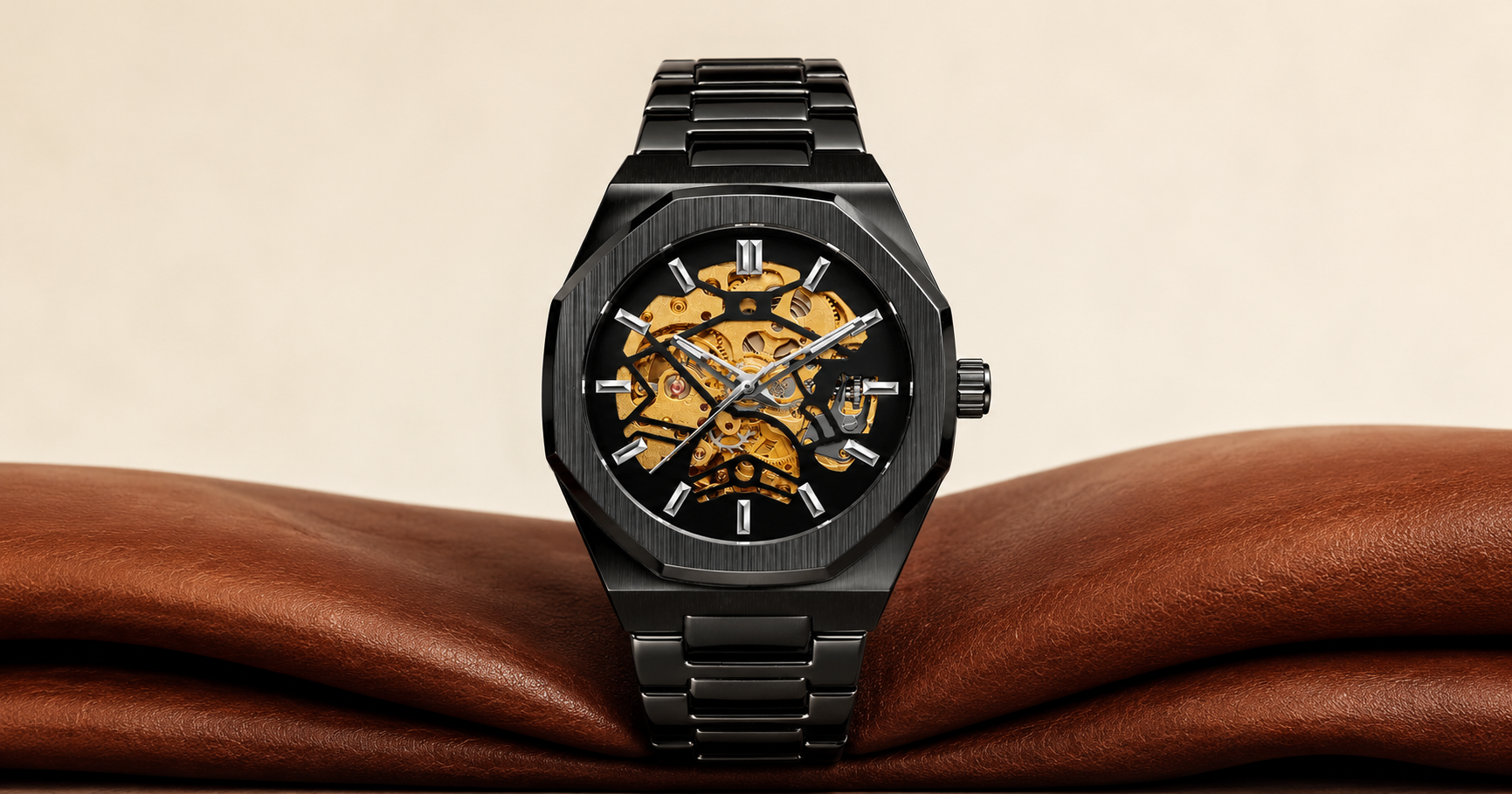
A skeleton dial — where the movement is visible through the face — reads as curiosity and confidence in equal measure. It's the watch of someone who isn't satisfied with surfaces, who appreciates what's underneath. It draws attention without asking for it, which requires a certain kind of self-assurance.
People who wear skeleton dials tend to be the most interesting person in the room. Not always the loudest.
The Path — from €149 →What a wrong watch says
A watch that's too large for the wrist reads as insecurity — as if the size is compensating for something. A watch that's too formal for the context reads as someone who hasn't read the room. A watch that's obviously cheap but trying not to look it reads as exactly that.
None of these are catastrophic. But they're noticed — often by people who wouldn't be able to articulate why they noticed.
The right watch, by contrast, is noticed in the best way: someone asks about it. Or they don't ask — they simply register that there's something considered about the person they're talking to.
The watch you choose is a small decision with a long reach. It's on your wrist every day, in every room, in every first impression.
Choose something that reflects how you actually want to be read — not how you think you should present yourself. The two are rarely the same thing, and people notice the difference.
Currently, every Matignon watch is available as a pair — buy one, receive a second at no extra cost. Two watches means two ways to be read, for the price of one.
Find the watch that speaks for you.
Explore all Matignon watches →Read more
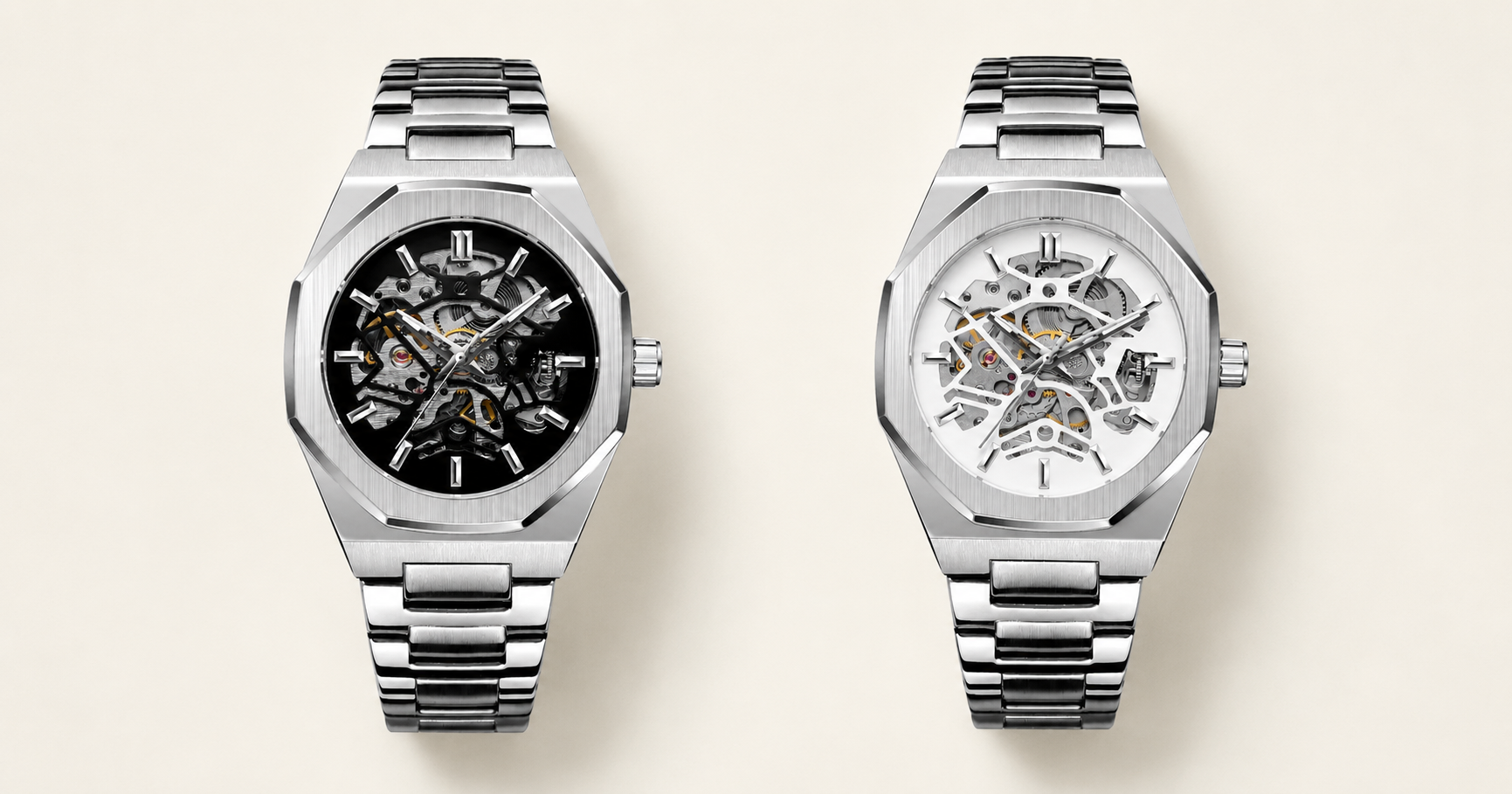
One watch is a habit. Two watches is a choice. A guide to building a pair that covers everything — and why it matters.
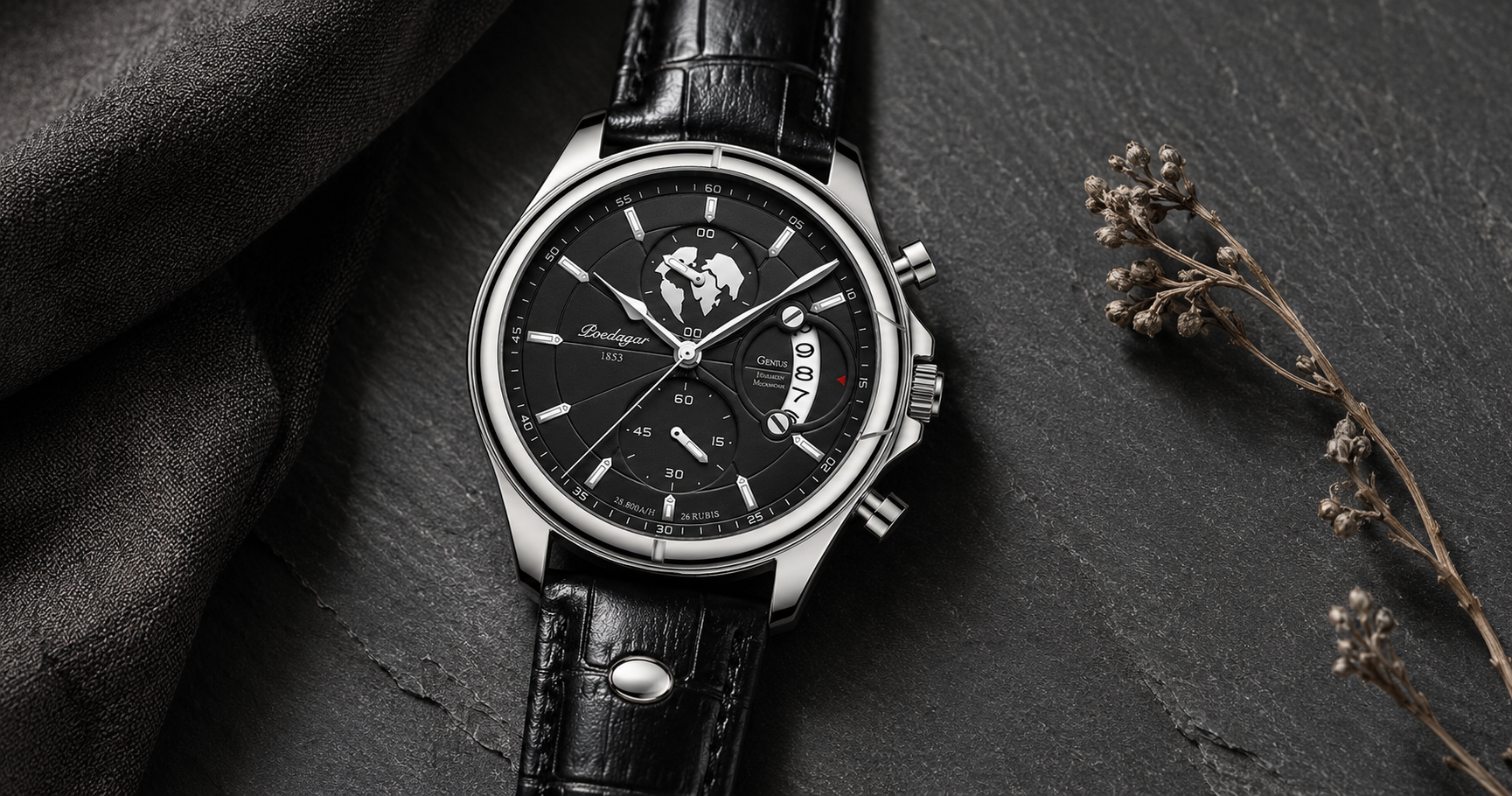
The hardest person to buy for is the one who already has what he needs. Here's why a watch is one of the few answers that actually works.